Qi Liu
Ph.D. Candidate
Department of Government,
Harvard University
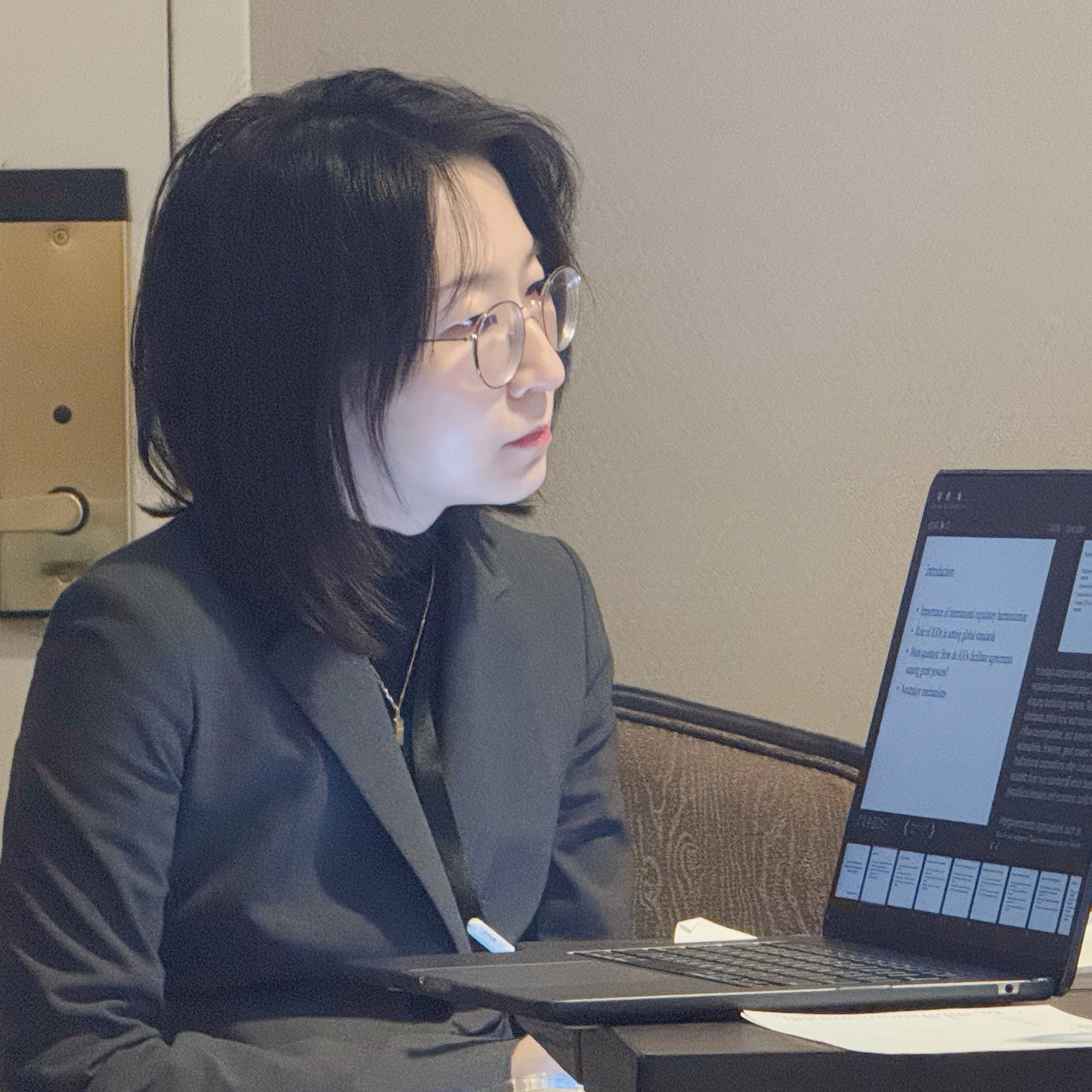
Welcome! I am Qi Liu. I am a Ph.D. Candidate at the Department of Government, Harvard University. I study international institutions and international political economy.
I am a Graduate Student Associate of Weatherhead Center for International Affairs, and I am a Graduate Fellow at the Institute for Quantitative Social Science and Princeton Sovereign Finance Lab.
I hold an M.A. in Political Science from Duke University and a B.A. in Economics (with a double degree in International Politics) from Peking University.
I am on the 2026-27 job market.
Dissertation Research
- The Scope Expansion of International Organizations (job market paper). Under Review.
- Winner of the Best Paper in International Relations, Midwest Political Science Association
- Winner of the Kenneth J. Meier Award for the best paper in bureaucratic politics, public administration, or public policy, Midwest Political Science Association
Abstract
Global challenges like climate change and artificial intelligence evolve rapidly, yet international organizations (IOs) respond unevenly. When do IOs adapt to new challenges, and why do some expand while others do not? I argue that although states create IOs to address specific cooperation problems, bureaucracies reshape what organizations do by changing staff expertise and tasking. IO bureaucrats are entrepreneurial, but their behavior is structured by state power. They selectively expand organizational scope toward issues prioritized by the major principals to maintain relevance and secure resources, attention, and recognition. I compile an original dataset of 630,500 job postings from 234 IOs (2007-2024) to measure operational scope. Using a difference-in-differences design exploiting the rising salience of climate and AI, I show that IOs expand only when the major principals prioritize an issue and contract when priorities shift away. Organizational adaptation thus occurs beneath formal mandates. Through bureaucratic incentives, state power reshapes IO expertise and tasking, thereby shifting the global governance agenda.Publications
- Moral Hazard in Global Cooperation Networks: Evidence from Bilateral Swap Agreements (with Xun Pang). International Studies Quarterly (2026), 70(3).
- China’s Bilateral Swap Agreements and Foreign Policy (with Xun Pang, James Raymond Vreeland). Review of International Political Economy (2026), 1–33.
Abstract
Globalization has intensified the cross-border transmission of financial risk, placing the Global Financial Safety Net (GFSN) at the core of international economic stability. Since the 2008 Global Financial Crisis, bilateral swap agreements (BSAs) have expanded rapidly, now exceeding International Monetary Fund (IMF) resources and fundamentally reshaping the architecture of global financial co-operation. While observers frequently warn that BSAs may induce moral hazard, systematic theoretical and empirical assessments remain scarce. We develop a network-based argument of moral hazard, arguing that states’ incentives to safeguard depend on their positions within the BSA network. We test theoretical expectations with an original dataset of global BSAs and causal inference techniques. The findings uncover a dual dynamic: central creditor states adopt more prudent positions, expanding their liquidity provision capacity by nearly 20 percentage points to reinforce network stability, whereas peripheral debtor states exhibit significant moral hazard, reducing their self-insurance by roughly 8 percentage points. This study shows that BSAs both diffuse the burden of liquidity provision and reallocate financial risk. In doing so, they generate new systemic vulnerabilities, shift the key currency system away from unilateral reliance on the United States toward burden-sharing among core central banks, and raise emerging challenges for domestic accountability in global financial governance.Abstract
We examine the foreign-policy implications of China's expanding network of bilateral swap agreements (BSAs). BSAs provide a line of credit that governments can draw on during times of crisis. We suspect that entering a BSA with China can bring countries that have few outside options and have been left behind by the US-led economic order into closer alignment with China. Applying a Bayesian generalized synthetic control approach, we estimate both aggregate- and individual-level treatment effects for different sets of countries. We find that, on average, a country's participation in BSAs with China increases its short-run foreign-policy alignment with China. Comparisons of country-level causal effects reveal that the short-run effect and a medium-run finding are driven by financially vulnerable countries and those supportive of China's global leadership. The results suggest that the introduction of Chinese BSAs as part of the global financial safety net has political implications for international affairs.Working Papers
- Sovereign Risk and Chinese Capital: Bond Market Reactions to New Loans (with Layna Mosley). Revise and Resubmit at British Journal of Political Science.[Featured in The Economist]
- Network Ties, Social Capital, and Multilateral Cooperation (with Christina Davis). Working Paper.
Abstract
When lending to sovereign governments, investors are especially attentive to default risk. We propose that investors react to the composition of existing debt, not just its overall level. We examine how bond markets respond to China's presence as a sovereign creditor, given features often associated with Chinese lending. Investors use news of Chinese loans as a heuristic, updating (and typically increasing) their risk assessments. Using event studies and text analysis of Standard \& Poor's ratings rationales from 2007-2022, we show that announcements of Chinese loans raise borrowing costs, especially for liquidity and budget-support loans and for governments aligned with China. Comparable announcements of World Bank loans, other bilateral credits, and new bond issues have no similar effect. These findings reveal that sovereign risk pricing depends not only on debt levels but also on creditor identities, highlighting how China’s rise as a major lender may constrain borrowers' access to bond-based finance.Abstract
What enables states to act collectively in multilateral fora? Each decision takes place within a broader set of interactions in international society that are shaped by power relationships and embedded within overlapping institutional commitments. Some states are highly connected, while others are isolated. Our goal is to identify these distinct social roles and assess their impact on collective action. We construct cooperation networks of defense alliances and intergovernmental organization (IGO) co-memberships from 1961 to 2014 as a measure of ties between states that build trust and reciprocity analogous to social capital at the individual level. Using a dynamic blockmodel, we identify latent groups of states with similar tie-formation profiles. These groups capture the social roles -- highly connected versus isolated -- that describe the position of states in cooperation networks. The model estimates the latent groups while accounting for shared interests that also lead them to form ties. We then test how group membership affects voting in the United Nations General Assembly (UNGA). States embedded in dense communities characteristic of high social capital exhibit greater voting cohesion on controversial resolutions across issue areas, whereas isolated states fail to coordinate. This pattern is strongest for defense alliances and IGO co-memberships; trade networks do not display the same property. In comparison with other groups, the voting cohesion among some members of the high density cooperation networks approaches that of members of Cold War alliance blocs, or members of small multilateral clubs such as the OECD or the AU. Our broader network-based measure provides a comprehensive perspective on the value of social capital for multilateral cooperation. These findings highlight the social foundations of multilateralism by demonstrating how cooperation networks support cohesive decision-making on critical issues.Work in Progress
- Seeking New Principals: The Reorientation of International Organizations after Major State Withdrawal.
- Imitate or Differentiate? Competition and the Scope of International Organizations.
-
Dynamic Bipartite Mixed Membership Stochastic Blockmodel Regression
(with Kosuke Imai, Santiago Olivella, and Ruofan Ma). [Polmeth Poster 2025]
Abstract
Many political networks are bipartite and dynamic, arising from interactions between (rather than within) different types of nodes and evolving over time. Yet, existing studies often aggregate networks across types of nodes and/or multiple time periods, leading to potential aggregation bias. We introduce a dynamic bipartite mixed-membership stochastic blockmodel regression that preserves the bipartite network structure while allowing for temporal network evolution. Our methodology enables researchers to uncover time-varying latent group structures that exhibit distinct patterns of interactions. We apply the proposed model to the intergovernmental organization (IGO) membership network to evaluate how the pattern of international cooperation is structured. Our data cover approximately 200 countries and more than 400 IGOs from 1965 to 2014. Consistent with the literature, we find that democracies are more likely to join IGOs in general. In addition, we further identify geopolitical alignment with the U.S. as an important predictor of membership in the most influential and selective IGOs.